Saturday, October 31, 2026 · London 08:54 · Washington 04:54

Breaking
1/4
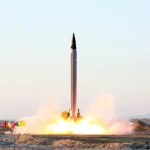
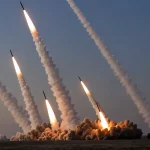
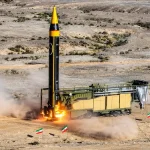
The long-range ballistic missile “Sejjil” is Iran’s first two-stage solid-propellant missile with a range of 2,000 kilometers, a terminal speed of Mach 13, and a heavy warhead. Due to its rapid launch readiness and exceptional maneuverability, it has become one of the most critical pillars of Iran’s strategic deterrence.
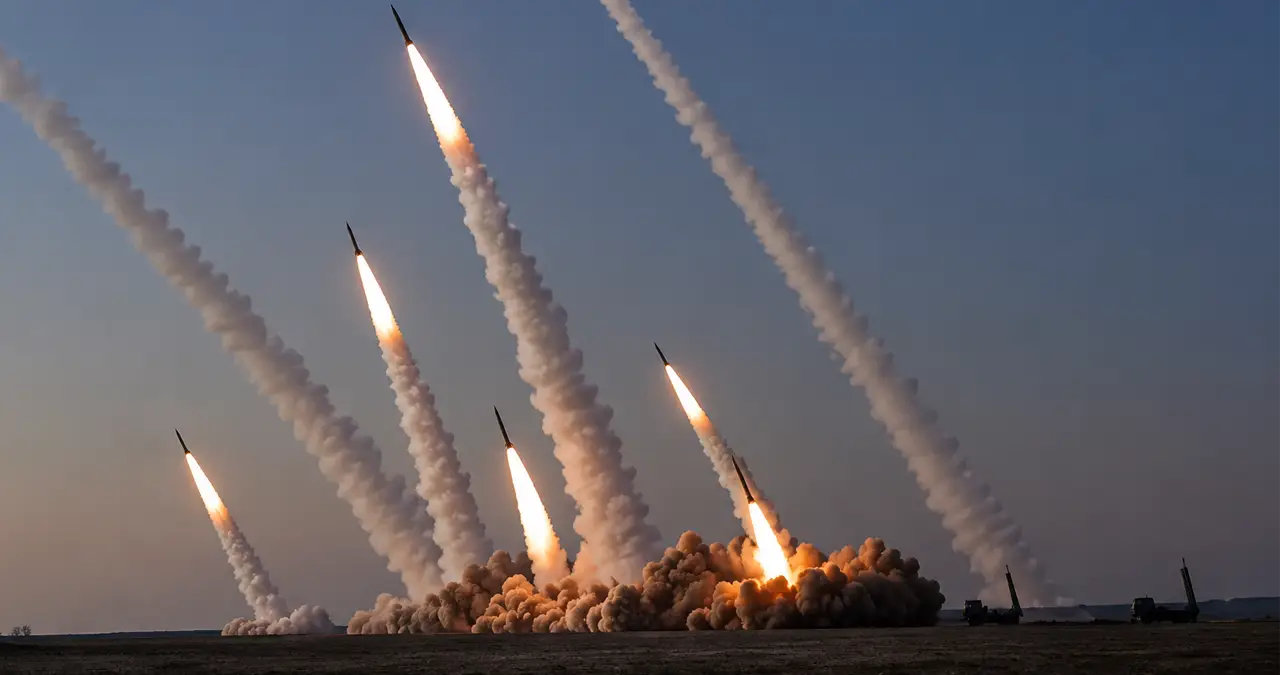
The missile capability of the Islamic Republic of Iran has been recognized over recent decades as the country’s most critical deterrence and defense factor. In this context, the “Sejjil” ballistic missile holds a special place; an advanced weapon that, relying on solid-propellant propulsion technology, a 2,000-kilometer range, and extraordinary acceleration in the terminal phase, has significantly transformed regional security and defense equations.
The Sejjil missile, developed under the “Ashura” project in the late 2000s, is considered the first Iranian long-range solid-fuel ballistic missile. The structure of this missile is designed as a two-stage system; after the ignition and fuel depletion of the primary motor, the first stage separates and the second motor ignites, allowing the missile to ascend toward the target with a lighter mass and higher acceleration.
This two-stage structure, combined with exiting the atmosphere and re-entering at a speed close to Mach 13 (over 4,300 meters per second), practically minimizes the reaction window of existing air defense systems and turns Sejjil into a serious challenge for the Zionist regime’s missile defense shields.
Unlike liquid-fueled missiles that require time-consuming fueling procedures prior to launch, solid-fueled missiles are permanently operational-ready:
The Sejjil warhead carries an explosive payload weighing between 500 and 650 kilograms of high-explosive materials. The tri-conical design of this missile’s warhead not only enhances its aerodynamic stability at hypersonic speeds, but also reduces radar cross-section and complicates tracking by enemy radars.
From a guidance and navigation perspective, the concurrent use of the Global Positioning System (GPS) and Inertial Navigation System (INS) provides high stability against interference, jamming, and electronic warfare countermeasures. This guidance architecture enables Sejjil to achieve an impact accuracy of under 10 meters; a figure categorized as “pinpoint” in the realm of long-range ballistic missiles.
Technical Specifications Table of the Sejjil Ballistic Missile
| Technical Specification | Value / Status |
|---|---|
| Missile Name | Sejjil |
| Type and Mission | Surface-to-surface ballistic missile |
| Operational Range | 2,000 km |
| Fuel and Propulsion Type | Composite solid fuel (2-stage) |
| Fuselage Length | 17.5 to 17.9 meters |
| Fuselage Diameter | 1.2 to 1.25 meters |
| Launch Weight (Armed) | Approximately 23,000 to 23,540 kg |
| Warhead Weight | 500 to 650 kg high explosives |
| Terminal Phase Speed | Approximately Mach 13 (over 4,300 m/s) |
| Guidance System | Hybrid INS + GPS (jamming resistant) |
| Impact Accuracy (CEP) | Under 10 meters |
The history of Iran’s missile self-sufficiency, spearheaded under the leadership of martyr Hassan Tehrani Moghaddam, advanced through the reverse engineering and upgrading of initial Shahab-1 (300 km range) and Shahab-2 (500 km range) missiles to the strategic Shahab-3 project with an 1,150 km range, which enabled direct reach to extraterritorial targets.
Subsequently, the Ghadr series missiles (such as Ghadr-F and Ghadr-H with ranges of 1,650 to 1,950 km and the ability to utilize cluster/multi-warhead payloads) were developed. Ultimately, with the development of Sejjil, indigenous solid-fuel technology reached its peak maturity. Furthermore, in recent years, the defense industries and the IRGC Aerospace Force have achieved more compact and efficient solid-propellant missiles through advanced carbon fiber knowledge and optimized motors, further completing the country’s formidable deterrence stockpile.