Commemorating Sacred Defense Week: Major General Safavi Addresses Iran’s Geopolitical Shifts and Security Dynamics
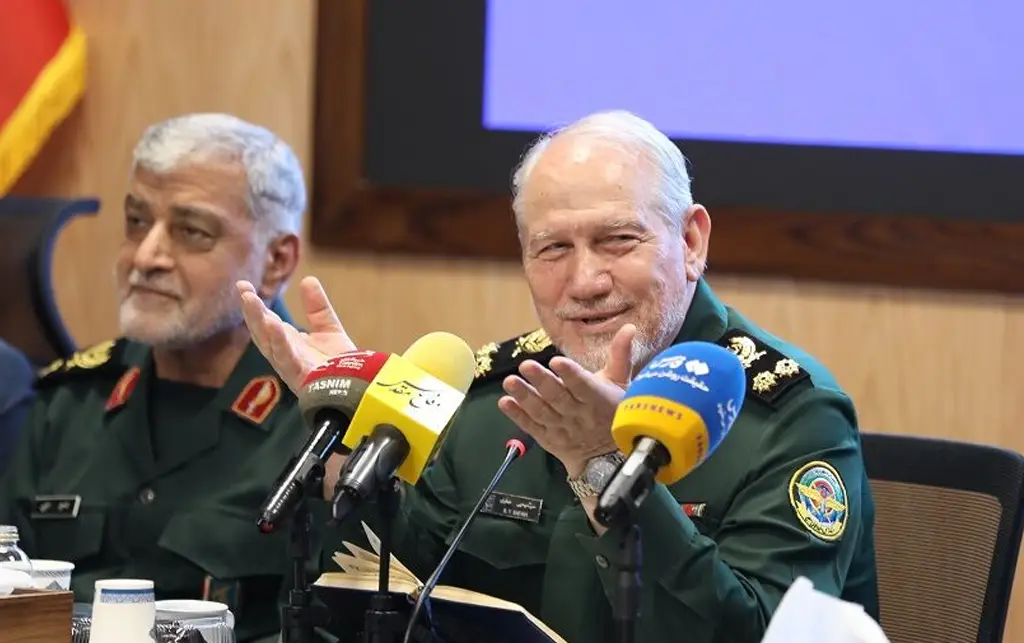
The ceremony commemorating “Sacred Defense Week” was held at the Plan and Budget Organization of Iran, featuring Major General Yahya Rahim Safavi, Senior Advisor to the Commander-in-Chief of the Armed Forces. This strategic session examined regional security variables, the evolving nature of military warfare, and Iran’s geopolitical requirements during the current global power transition.
The End of the U.S. Hegemonic Era in the Region
Highlighting strategic regional developments, Major General Safavi addressed the Persian Gulf littoral states, stating: “Neighboring countries must recognize the new geopolitical realities; the U.S. will not return to the region. We have coexisted for thousands of years, and logic dictates that neighbors must reach an understanding to ensure sustainable security.”
Economic Diplomacy: The Key to Breaking Sanctions
Analyzing Iran’s emerging capacities, the Senior Advisor to the Commander-in-Chief remarked: “We must strengthen our foreign policy by maximizing the utilization of Iran’s position within the Shanghai Cooperation Organization (SCO), BRICS, and the Eurasian Economic Union (EAEU), while leveraging the political support of China and Russia.”
Emphasizing the potential of Iran’s 15 neighboring countries, he added: “The North-South Corridor and the Zahedan-Chabahar railway will become operational by the end of this year. We also hope for the rapid commissioning of the Rasht-Astara rail link. By activating these corridors, Iran can effectively break through the siege of sanctions.”
The Fundamental Shift in Warfare: From Ground-Based to Air-Based
In another segment of his speech, Major General Safavi described the fundamental differences between today’s conflicts and the era of the Sacred Defense. Recalling the period of the imposed war—during which all global and regional powers supported Saddam Hussein—he stated: “The eight-year war was ground-based and focused on territorial conquest. However, modern warfare is air-based, sea-based, and built upon complex information technologies, cruise missiles, and ballistic systems.”
The Strategic Failure of Anti-Iranian Coalitions
Questioning whether Saddam Hussein achieved his objectives, the senior military official asserted: “We believe that anyone who fails to achieve their goals has been defeated. We state clearly that neither Saddam during the Sacred Defense, nor the Americans and Netanyahu in recent years, have succeeded in destroying or breaking the will of the Iranian nation.”
He added: “Today, supported by the nation’s presence on the scene, the capability of the armed forces, and the stability of the government, all global strategic experts acknowledge that the U.S. has failed in its confrontation with the Islamic Republic of Iran.”
Commemorating the Martyrs of the Resistance
During another portion of the ceremony, Rahim Mombini, Deputy Head of the Plan and Budget Organization, noted the martyrdom of Seyyed Hassan Nasrallah, Secretary-General of Hezbollah Lebanon, and commemorated his character traits. The event also reviewed the memoirs of the honored prisoner of war, Masoumeh Abad, from her book I Am Alive, and concluded with the presentation of plaques of honor to seven veterans and combatants of the Plan and Budget Organization.