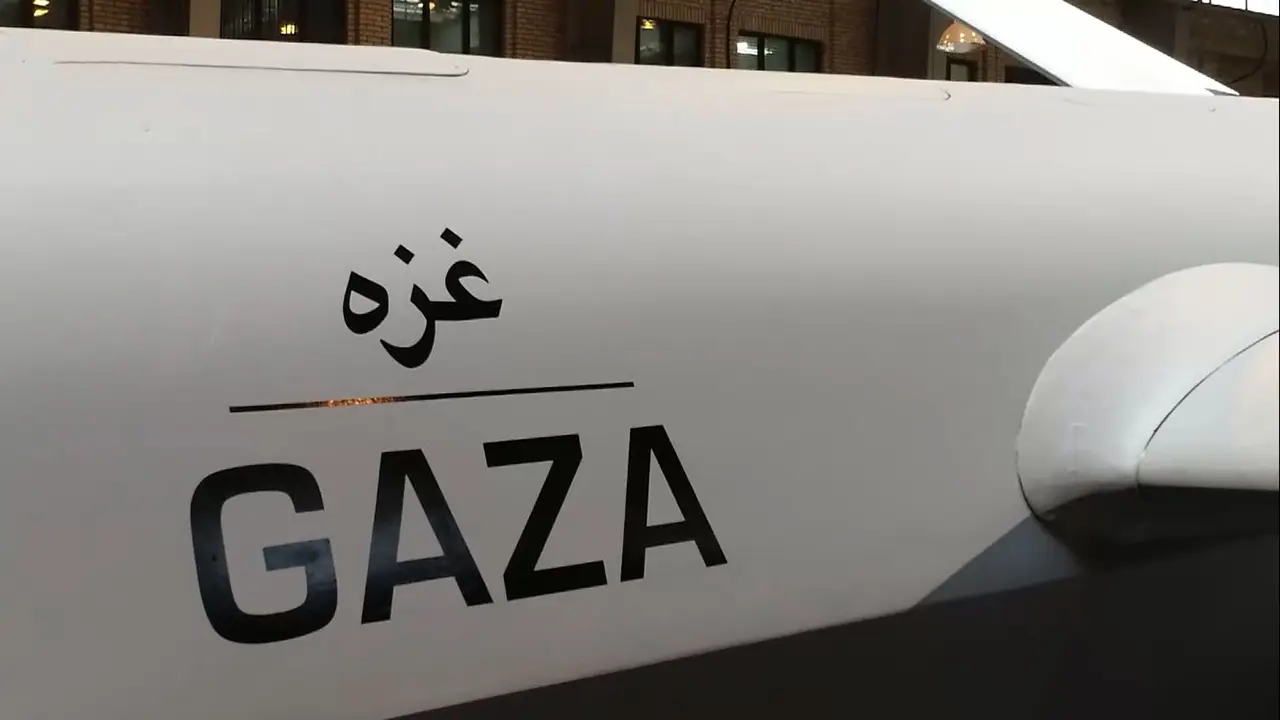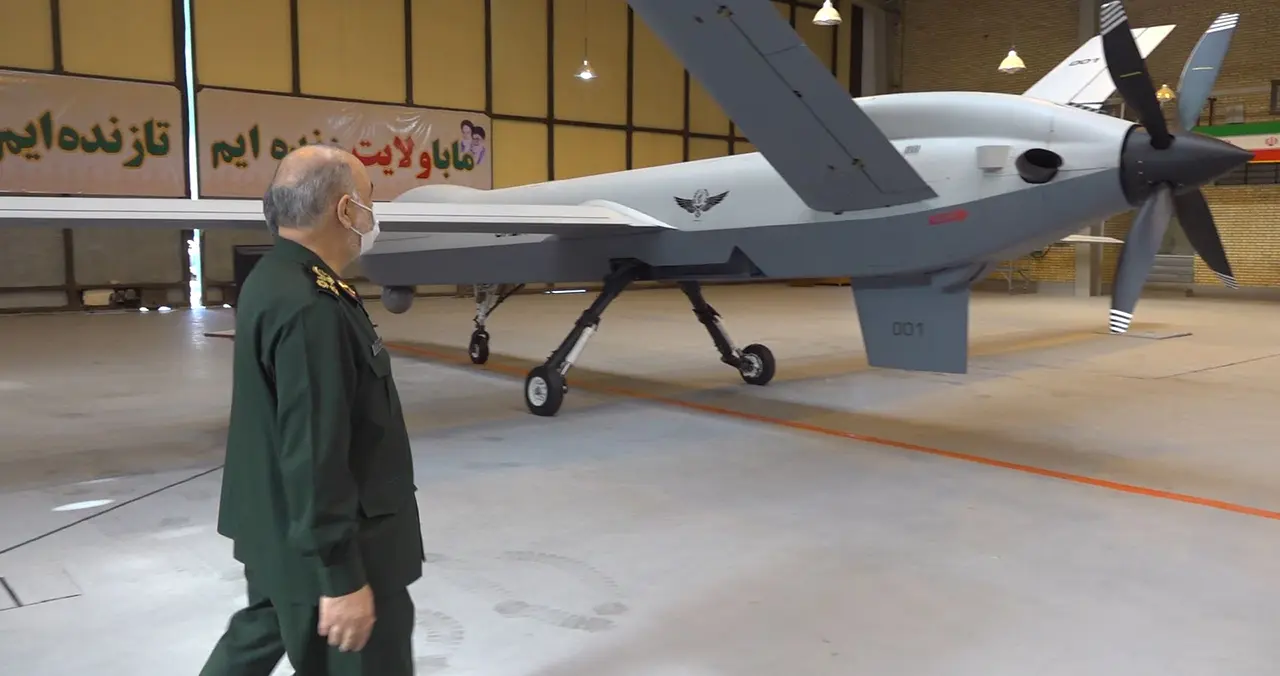
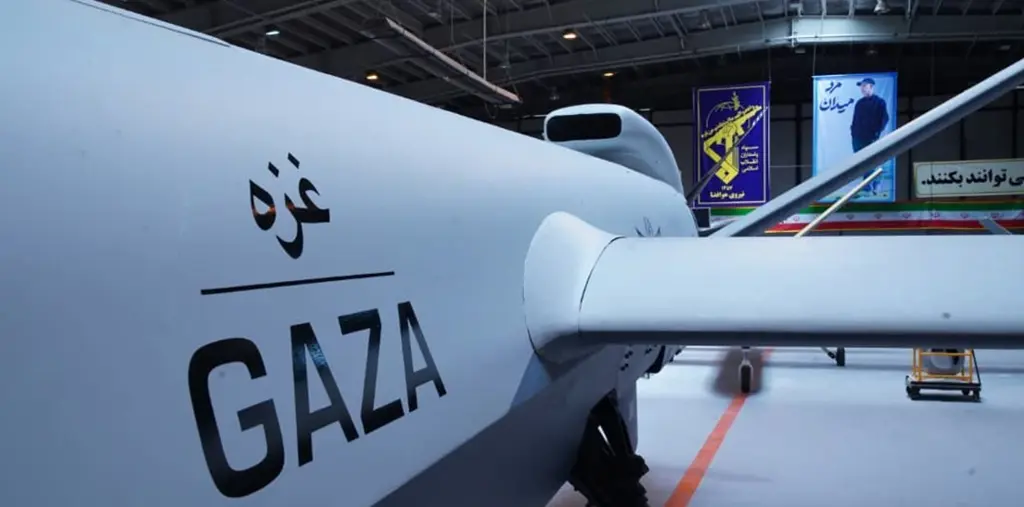
The Shahed 149 drone, known as “Gaza,” is Iran’s most advanced and heaviest reconnaissance-combat unmanned aerial vehicle, manufactured by the IRGC Aerospace Force and unveiled in May 2021. With a wingspan of 21 meters, a 650-horsepower turboprop engine, a flight ceiling of 35,000 feet, and an official range of 2,000 kilometers, this aircraft is capable of carrying at least 500 kilograms of optical equipment and 13 bombs during long-duration missions of up to 35 hours.
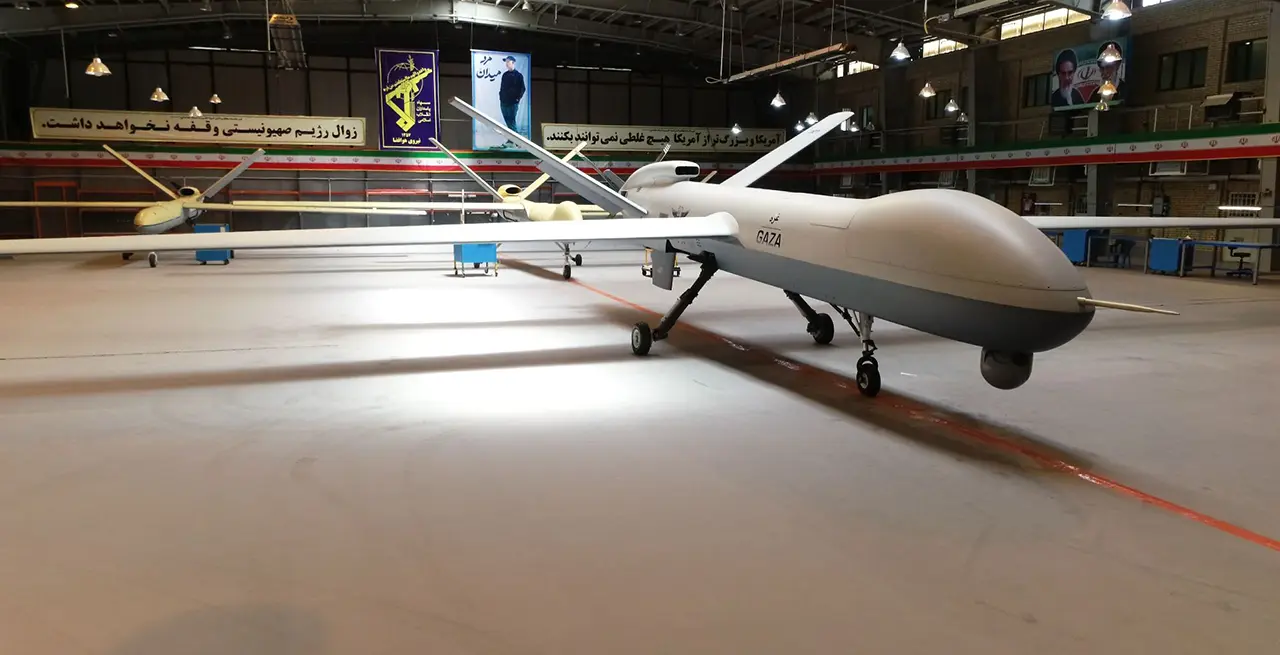
The Shahed 149 drone, or “Gaza,” is a symbol of the technological leap of Iran’s defense industry in the field of wide-body drones. This unmanned aerial vehicle (UAV), which was unveiled for the first time in May 2021, is classified as a super-heavy drone and has defined new standards in the country’s drone industry due to its extensive operational capabilities. Gaza is not just a reconnaissance drone, but a powerful combat platform for conducting long-range operations.
Technical and Performance Specifications of Shahed 149
The airframe design of the Gaza drone, with a length of 11 meters, a height of 3.8 meters, and a wingspan of 21 meters, demonstrates precise engineering to achieve flight stability in long-duration missions. With a maximum takeoff weight (MTOW) of 3,100 kg, this aircraft has the capacity to carry at least 500 kg of payload, which is a combination of signals intelligence (SIGINT) equipment and combat weaponry.
Mission Range and Endurance Capacities
The official flight range of the Shahed 149 (Gaza) drone within the operational radius is stated to be 2,000 kilometers. However, technical analyses based on the 35-hour flight endurance and a maximum speed of 350 km/h indicate that this drone is also capable of reaching much longer distances:
This operational range enables deep access to surrounding regions and continuous aerial control.
Turboprop Propulsion System
Shahed 149 is the first Iranian drone to utilize a turboprop engine. This engine choice is the main difference between Gaza and previous drones (which mainly used piston engines). Due to the use of a gas turbine, the turboprop engine, in addition to providing higher speed, has enabled high-efficiency flight at high altitudes, which has resulted in an increased flight ceiling and the 35-hour flight endurance of this drone.
Combat Capabilities and Rotary Launcher
One of the prominent features of Shahed 149 is its offensive power. According to IRGC Aerospace Force commanders, this drone has the capability to carry 13 bombs. Published images indicate the existence of a Rotary Bomb Launcher mechanism in the belly bay, which carries 5 bombs in the internal space, and 8 other bombs are installed on under-wing hardpoints. The Gaza drone is capable of carrying various precision-guided and fire-and-forget missiles from the “Sadid” series.
Advanced Surveillance and Optical Systems
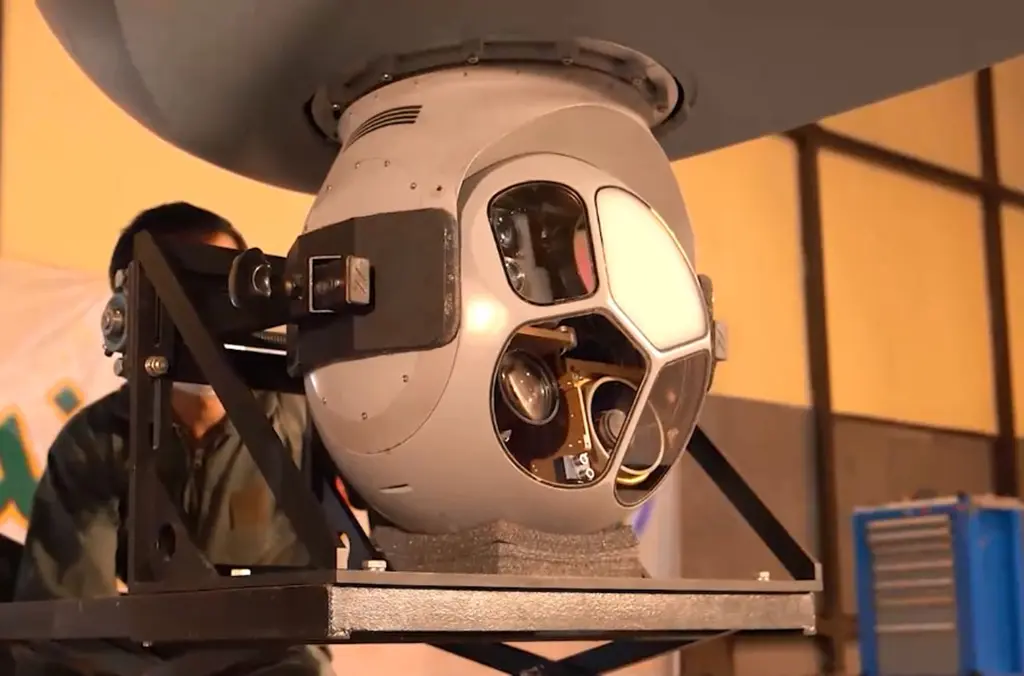
In the reconnaissance section, Shahed 149 is equipped with one of the most advanced indigenous electro-optical systems. This system includes daylight cameras with a minimum zoom capability of 100x to 120x, a thermal camera (imager), and a laser rangefinder. The use of a “catadioptric telescopic lens” in this system for the first time in Iranian drones has significantly enhanced the magnification power and reconnaissance accuracy of this drone compared to previous models.
In terms of surveillance and reconnaissance, Shahed 149 is equipped with a new generation of surveillance systems:
Combat Organization and Weapon Carrying Capacity
According to Brigadier General Amir Ali Hajizadeh, Commander of the IRGC Aerospace Force, this drone is capable of carrying 13 bombs in a single flight. The armament loading configuration of this aircraft is as follows:
1. Internal compartment and rotary launcher
Based on existing evidence and the space provided in the lower fuselage, it is probable that Gaza utilizes a Rotary Bomb Launcher mechanism, which has the capacity to carry up to 5 bombs in the internal compartment. This technology is being presented for the first time in Iran’s indigenous drones.
2. Under-wing pylons
In addition to the middle bay, 8 other bombs are loaded onto weapon hardpoints located under the drone’s wings.
3. Compatible munition types
Precision-guided and fire-and-forget missiles of the Sadid family, weighing approximately 34 kg each, are considered the main options for Shahed 149’s armament load; loading 13 of these weapons (equivalent to about 442 kg) is well within the 500 kg authorized combat payload capacity of this aircraft.