
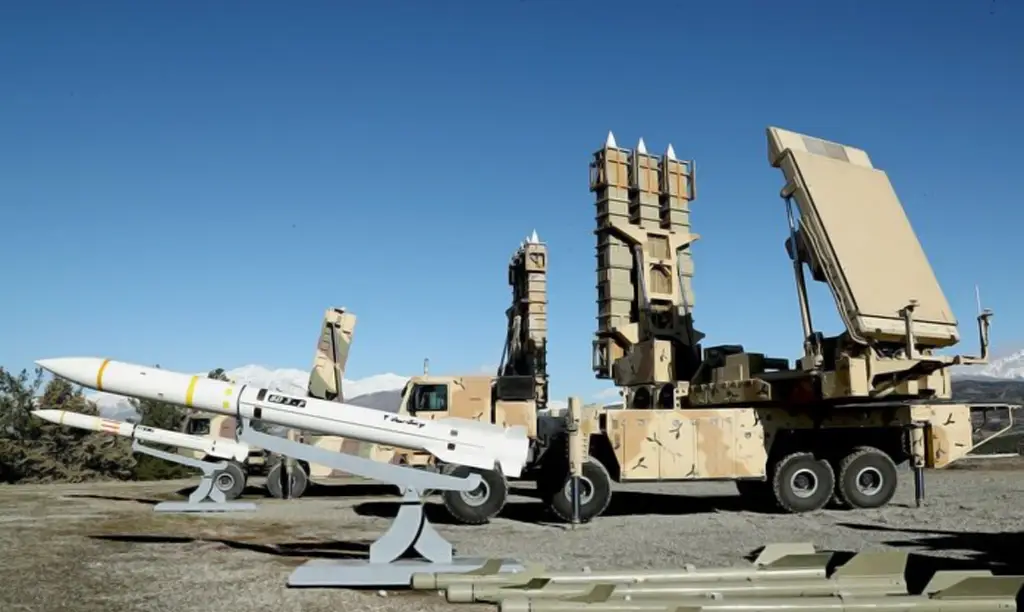
An Impenetrable Barrier Over the Heavens; A Strategic Transformation in Air Defense and the Requirements for Strengthening the Country’s Defense Foundation
The transformation in the nature of modern battles and the movement of wars away from classical ground patterns toward combined operations—encompassing aerial, intelligence, electronic warfare, cyber, and cognitive dimensions—has doubled the necessity of continuously modernizing and elevating deterrent capability. Today, with the dominance of “long-range” battles in which weapons are launched from hundreds of kilometers beyond the borders, the country’s integrated air defense network is regarded as the frontline for safeguarding territorial integrity and national survival.
The Field Test of Indigenous Systems Against Advanced Threats
The experience of recent battles and the aggressions of the Zionist regime and the US army showed that the combination of indigenous systems of the IRGC Aerospace Force and the Army’s air defense—such as the missile and radar systems “Bavar 373,” “3rd of Khordad,” “15th of Khordad,” and “Arman,” along with offensive and interceptor drones—has created a formidable barrier against hostile targets. During the defense of the country’s skies, this integrated network, by downing dozens of the enemy’s most advanced aircraft and unmanned aerial vehicles, proved the effectiveness of the self-reliant model of defense technology under real battle conditions.
High-ranking commanders of the armed forces, referring to the experiences gained, emphasize the continuous updating of the software and hardware components of equipment; a dynamic process during which air defense, while offering its valiant martyrs on the frontline, frustrated the enemy’s aerial strategies and consolidated the deterrence equations in the country’s favor.
The Shift of Defense Doctrine Toward a Preemptive and Offensive Approach
One of the most fundamental consequences of the experiences of recent battles is the transformation in the defense doctrine of the armed forces and the transition toward “preemptive actions” within the framework of the principle of legitimate defense and the United Nations Charter. Given the depth of trans-border threats, defense is not necessarily defined within geographical borders; rather, a decisive response to the origins and bases of threat design with offensive weapons, precision-guided missiles, and long-range drones has been established as a fundamental pillar of active deterrence.
Three Strategic Pillars in the Message of the Command of the General Staff of the Armed Forces
The main lines of the roadmap for advancing air defense rest on three fundamental components:
Reliance on domestic capability: achieving independence from the foreign supply chain and rendering arms sanctions ineffective by producing fully indigenous radar, missile, and electronic warfare systems.
The centrality of committed human capital: viewing specialized, faithful, and skilled human resources knowledgeable in cognitive technologies and artificial intelligence as the driving engine of air defense systems.
Long-range and intelligent coverage: developing radar and optical surveillance as well as the ability to engage and destroy targets at the greatest possible distances from the country’s borders.
Strengthening the Defense Budget; A Vital Investment for National Stability
Achieving an integrated, 24-hour air defense equipped with the latest anti-radar technologies, unmanned aerial vehicles, cruise missiles, and cyber systems requires sustainable structural and financial support. The government’s approach in allocating special credits to the armed forces treats the defense budget not as a consumable expense, but rather as a “strategic investment” to guarantee economic and political stability and to preserve the country’s social capital.
The consolidation of air defense, in conjunction with the development of military aviation and the advanced fleet of the navy, has created a formidable and impenetrable wall around Iran’s borders, ready to thwart any aggression at the point of its inception.