Saturday, October 31, 2026 · London 08:00 · Washington 04:00

Breaking
1/4
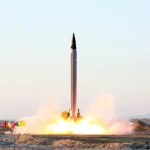
The Kheybar or Khorramshahr-4 missile is an Iranian medium-range ballistic missile from the fourth generation of the Khorramshahr missile family. Designed with liquid fuel, an announced range of 2,000 kilometers, a 1,500-kilogram warhead, a speed of up to Mach 16, and the capability of mid-course guidance and trajectory correction outside the atmosphere.
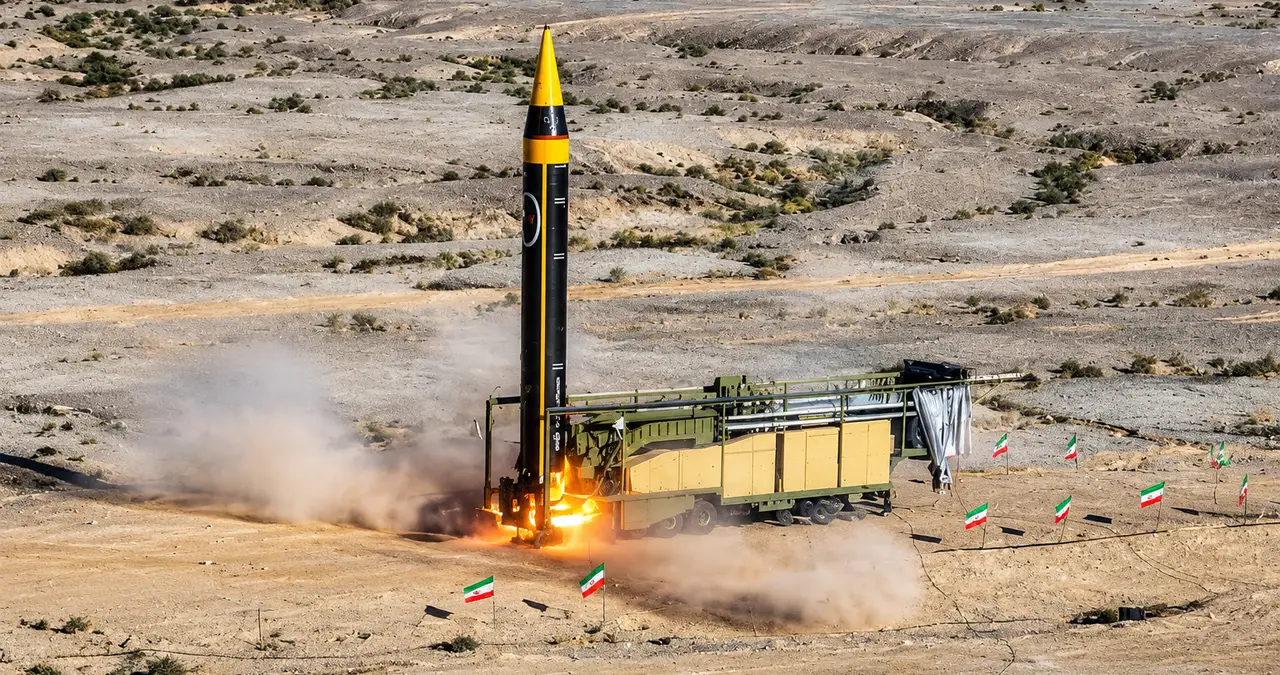
The Kheybar missile, also known as Khorramshahr-4, is one of the latest missile achievements of the Islamic Republic of Iran and the fourth generation of the Khorramshahr family of missiles. This missile is in the medium-range ballistic missile category and, using liquid fuel, is designed to target long-distance objectives.
The announced operational range for the Kheybar missile is about 2,000 kilometers. This missile also has the capability to carry a heavy warhead weighing 1,500 kilograms; a feature that, alongside high speed, trajectory correction capability, and an exo-atmospheric guidance system, highlights its position among Iran’s strategic missiles.
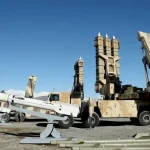
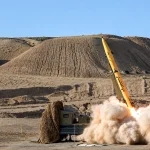
The Kheybar missile is fired from a tactical mobile launch platform. The use of a mobile launcher allows for faster movement of the system and relocation of the launcher.
The Kheybar missile, which is also officially introduced under the name Kheybar-Shekan, was unveiled on Thursday, May 25, 2023 (Khordad 4, 1402), in the presence of Mohammad Reza Ashtiani, Minister of Defense of the Islamic Republic of Iran.
This missile, with a 2,000 km range and a 1,500 kg warhead, uses liquid fuel, and in its design, an attempt has been made to combine the ability to attack long-range targets with speed, precision, and high operational readiness.
One of the most important features of the Kheybar missile is its possession of a guidance and control system in the mid-course flight phase. In this method, after exiting the Earth’s atmosphere, the missile enters a stage where its warhead can correct its path and movement status.
Upon the missile exiting the atmosphere, the main engine fuel is exhausted and the main engine shuts down. After that, the warhead separates from the missile body and its guidance continues via small control and steering engines.
Based on the information provided, four small control engines and four small steering engines are responsible for the control and guidance of the warhead outside the atmosphere.
This system can create the following capabilities:
The lack of need for control fins for the warhead causes a reduction in the weight of this section. The reduced weight can be used to increase explosive materials or optimize other parts of the warhead and, as a result, increase the missile’s destructive power.
In the initial text, extra-atmospheric guidance is considered one of the factors that increases the Kheybar missile’s resistance against electronic warfare attacks. Since an important part of the path of guidance and trajectory correction of the warhead is done outside the atmosphere, the effectiveness of some electronic jamming methods on the flight process will be more difficult.
However, the level of vulnerability of any missile against electronic warfare depends on various factors such as the type of jamming system, guidance method, flight conditions, and the structure of the opposing defense network.
The Kheybar missile engine has high specific impulse. The specific impulse of this engine is announced to be about 280 seconds on the ground and 300 seconds in vacuum conditions.
This feature causes the missile’s speed outside the atmosphere to reach about 16 Mach. The missile’s speed while moving inside the atmosphere and approaching the target is stated to be about 8 Mach.
The announced speeds for the Kheybar missile are:
High speed reduces the reaction time of defense systems and complicates the process of detection, tracking, and countering the missile.
In addition to strategic capabilities, the Kheybar missile also has significant features regarding preparation and launch speed. Based on announced information, the time required to prepare and fire this missile has been reduced to less than 12 minutes.
This operational speed depends on several factors:
Self-igniting or hypergolic fuel reacts upon contact between fuel components without needing a spark or separate ignition system. This feature makes the engine startup process simpler and faster.
New fuel tanks have been used in the design of the Kheybar missile. Based on the initial text, these tanks allow for the storage of fuel injected into the missile for several years.
This capability is of significant operational importance; because the missile can remain in a standby state for a longer period and, in times of threat, be ready for launch without needing to go through all refueling steps.
The Kheybar missile is a liquid-fueled medium-range ballistic missile designed and built by Iranian specialists. Its length is announced to be about 13 meters and its weight over 10 tons.
This missile has the capability to carry a 1,500 kg warhead and its announced effective range is about 2,000 kilometers. The extra-atmospheric guidance system, maneuverable warhead, and high speed are among its most important technical features.
| Feature | Specification |
|---|---|
| Name | Kheybar / Khorramshahr-4 / Kheybar-Shekan |
| Type | Medium-range ballistic missile |
| Generation | 4th generation of the Khorramshahr missile family |
| Length | 13 meters |
| Weight | Over 10 tons |
| Announced Effective Range | 2,000 km |
| Calculated Final Range | 2,000 km |
| Fuel Type | Liquid |
| Warhead Weight | 1,500 kg |
| Max Speed Outside Atmosphere | 16 Mach |
| Speed Inside Atmosphere | 8 Mach |
| Speed Outside Atmosphere | Approx. 19,000 km/h |
| Speed at Impact | Approx. 9,000 km/h |
| Announced Accuracy | Less than 30 meters at 2,000 km range |
| Launch Platform | Tactical mobile |
| Designer | Ministry of Defence and Armed Forces Logistics |
| Manufacturer | Iran |
Accuracy is an important element in evaluating the operational capability of ballistic missiles. Based on the information provided, the accuracy of the Kheybar missile is announced as less than 30 meters at a range of 2,000 kilometers.
Also, in some remarks made, the accuracy of this missile under specific conditions is stated as less than 10 meters. The guidance and control system outside the atmosphere and the possibility of correcting the warhead trajectory are considered factors effective in increasing the accuracy of the Kheybar missile.
The final degree of accuracy can depend on factors such as firing range, flight conditions, target type, status of the guidance system, and warhead type.
The Kheybar or Khorramshahr-4 missile is an Iranian medium-range ballistic missile and the fourth generation of the Khorramshahr missile family. This missile, with an announced range of 2,000 km, a 1,500 kg warhead, a length of 13 meters, and a speed of up to 16 Mach outside the atmosphere, is considered one of Iran’s most important missile systems.
Guidance and trajectory correction of the warhead outside the atmosphere, use of four small control engines and four small steering engines, cluster warhead capability, rotational movement capability, self-igniting fuel, and a preparation time of less than 12 minutes are prominent features of the Kheybar missile.