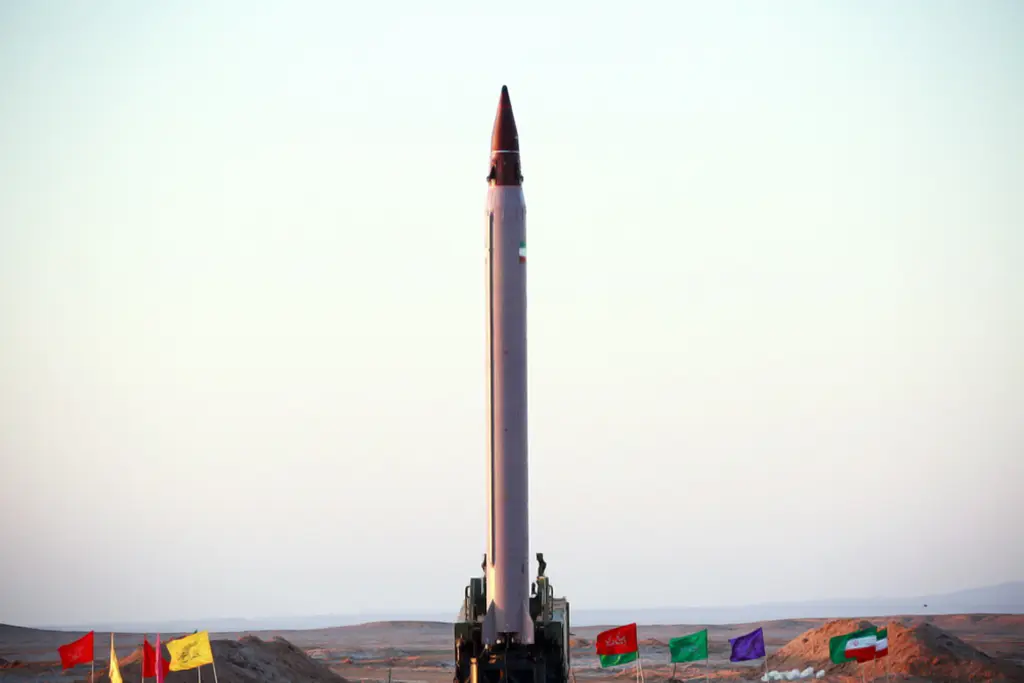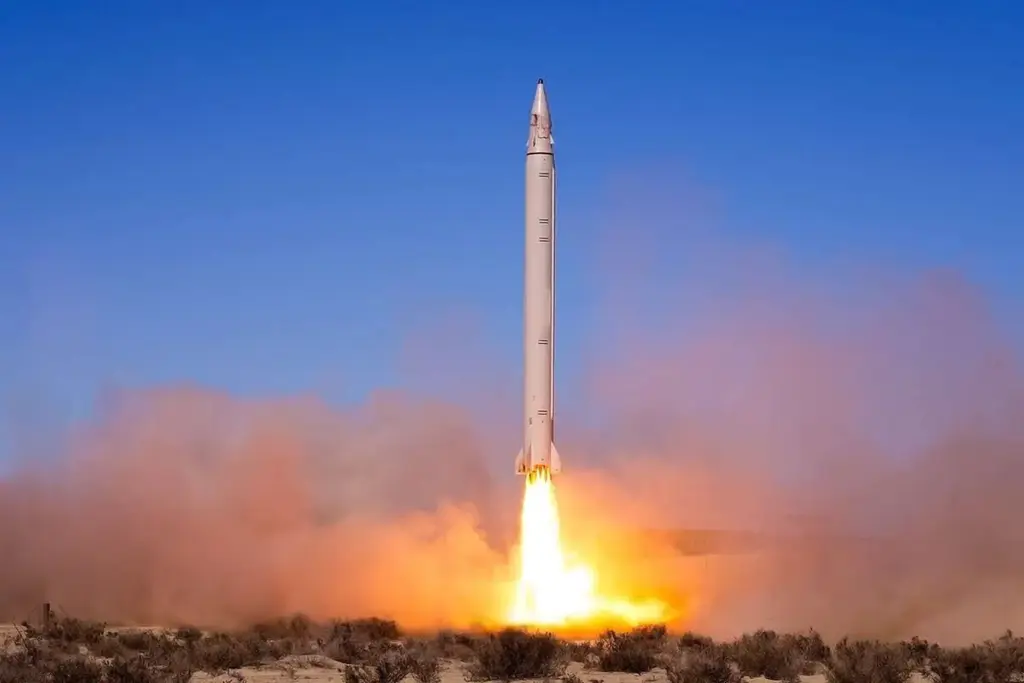
The Emad ballistic missile represents Iran’s new generation of liquid-fueled surface-to-surface missiles, engineered and manufactured by defense scientists at the Aerospace Industries Organization (AIO) under the Ministry of Defense. Widely recognized as Iran’s first long-range ballistic missile featuring precision terminal guidance and trajectory correction until the moment of impact, the projectile achieves pinpoint accuracy with a circular error probable (CEP) reduced to under 10 meters, largely driven by its fin-stabilized, highly maneuverable warhead.
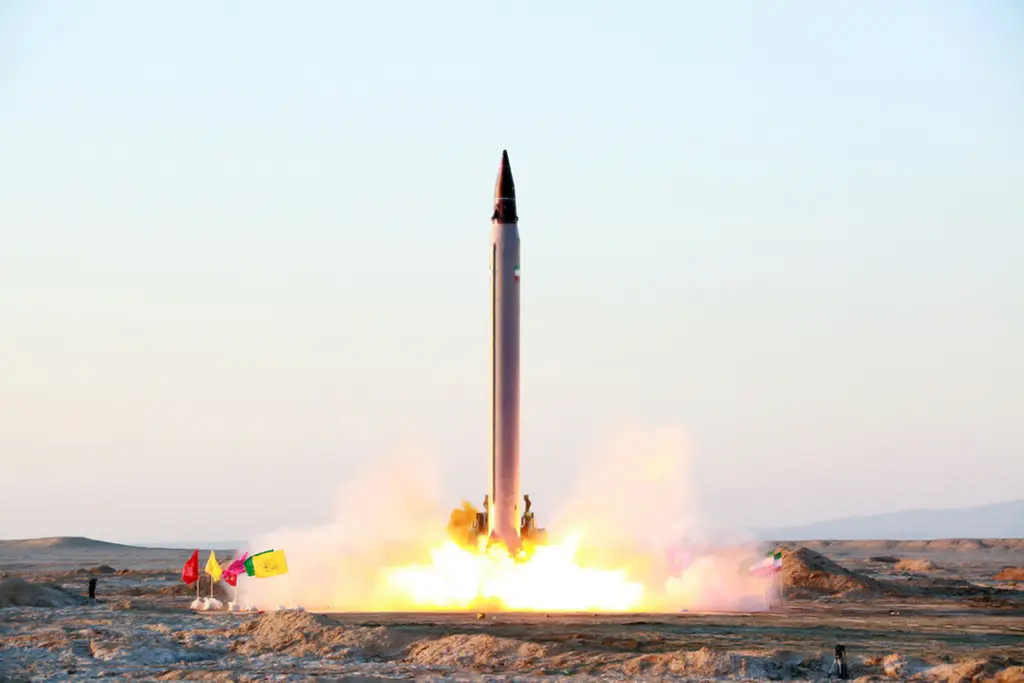
The Emad ballistic missile stands as one of the most prominent defense milestones of the Islamic Republic of Iran, officially unveiled and test-fired on October 11, 2015. Developed through the expertise of scientists at the Aerospace Industries Organization (AIO) of the Ministry of Defense and Armed Forces Logistics, this strategic weapon marks a critical turning point in Iran’s missile doctrine—shifting the paradigm from “high-error deterrent rockets” toward “pinpoint-accurate strike systems equipped with guided warheads.”
During the official unveiling ceremony, then-Minister of Defense Brigadier General Hossein Dehghan described the projectile as Iran’s first long-range missile capable of guided control until the exact moment of impact. He emphasized that mastering this technology constitutes a comprehensive technological and operational leap within the nation’s strategic deterrence framework.
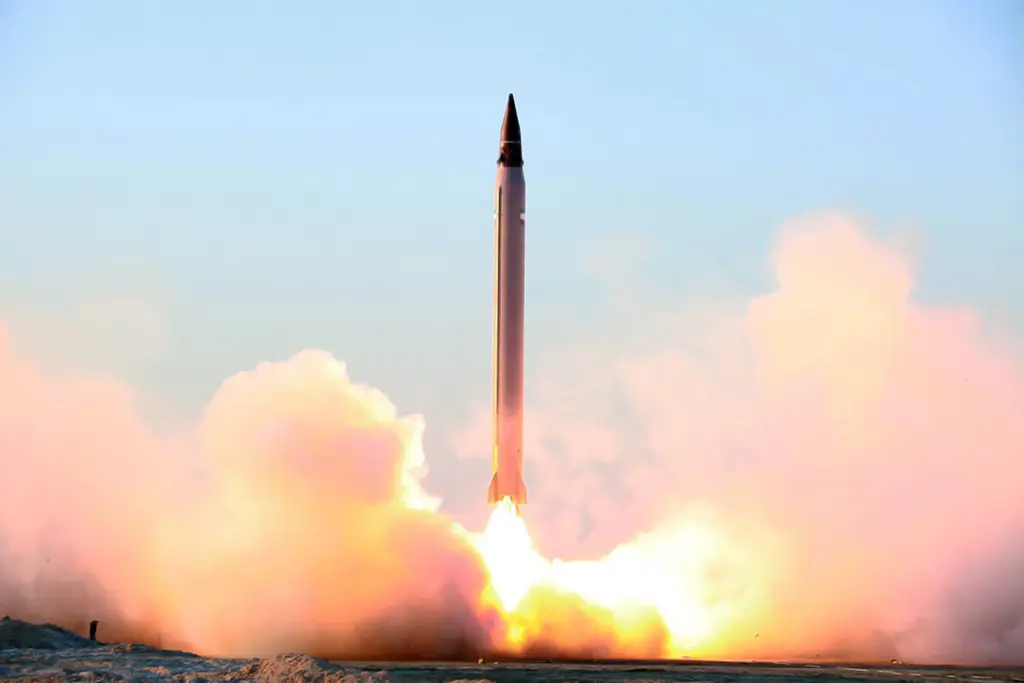
The Emad is classified as a surface-to-surface medium-range ballistic missile (MRBM) powered by a single-stage liquid-propellant engine. Based on its structural dimensions and propulsion setup, the operational and design specifications are as follows:
The defining characteristic of the Emad ballistic missile lies in the engineering of its warhead. With a total payload mass exceeding 750 kilograms, approximately 450 to 500 kilograms consists of a high-explosive conventional blast fragmentation charge.
Unlike earlier missile generations where either the entire rocket body or a fixed conical nosecone plunged along an unalterable trajectory toward the target, the Emad incorporates a separating warhead fitted with four aerodynamic control fins. By harnessing dynamic air pressure during atmospheric reentry, these control surfaces execute flight-computer commands to correct course deviations in real time. This mechanism provides two decisive advantages:
Terminal Pinpoint Accuracy Down to the Final Second:
Even when subjected to initial boost-phase drift or high-altitude crosswinds, the aerodynamic fins perform micro-maneuvers to adjust the angle of attack and terminal dive vector, steering the warhead directly into designated coordinates.
Countermeasure Decoupling and Air Defense Evasion:
Because the reentry vehicle breaks away from a predictable parabolic ballistic arc via terminal course adjustments, adversary early-warning tracking radars and surface-to-air interceptors (such as Patriot PAC-3, Arrow, and David’s Sling) struggle to compute an accurate intercept point before impact.
To understand the strategic significance of the Emad, one must examine the evolution of Iran’s liquid-fueled ballistic missile program:
The Emad is engineered for high survivability, operational mobility, and rapid-response readiness across diverse combat scenarios through two primary deployment modes:
Road-Mobile Transporter Erector Launchers (TELs):
Mobile TEL platforms allow missile units to disperse quickly, maneuver into concealed firing positions across varied terrain, execute launches, and relocate before counter-battery strikes can track their origin.
Underground Silos and Hardened “Missile Cities”:
Thanks to its structural integrity and stable fueling protocols, the Emad can be stored in large quantities within subterranean missile complexes, secured deep inside mountain bunkers, and kept on standby for vertical cold or hot launches from hardened underground silos.