US Military Suffers Technological Surprise in the Persian Gulf
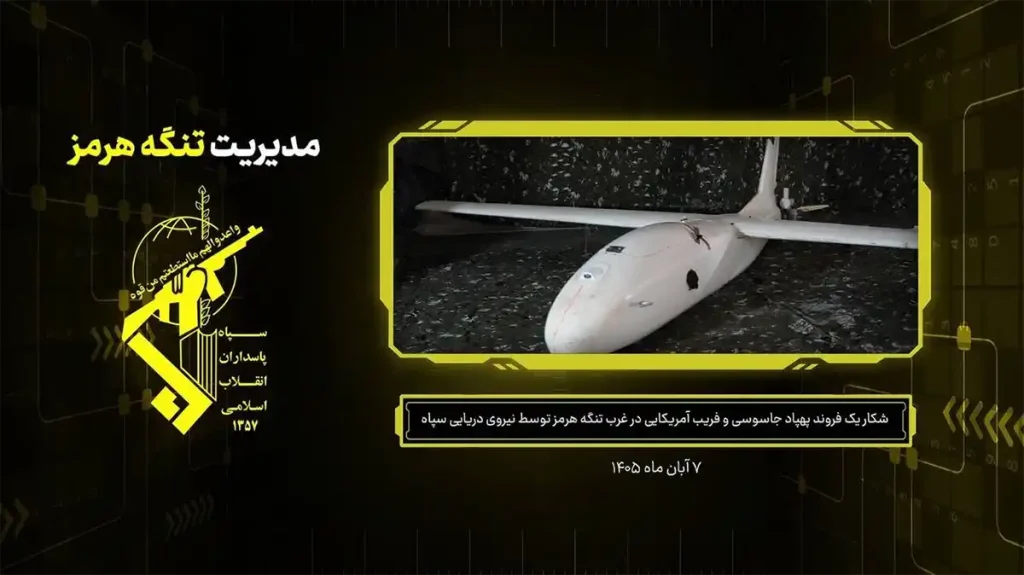
The Islamic Revolutionary Guard Corps Navy (IRGCN) has once again demonstrated its superior edge in electronic warfare by executing a precise and sophisticated offensive cyber-electronic operation. Iranian defense specialists successfully infiltrated the communication and guidance layers of a US military reconnaissance aircraft, capturing it prior to the completion of its air-defense assessment scenario.
Infiltrating Guidance Systems: Intact Recovery of the MQM-170
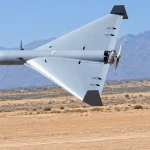
According to an official IRGC Navy announcement cited by the IRGC media outlet and IRNA, electronic warfare units of the force tracked and locked onto a US MQM-170 drone over the airspace west of the Strait of Hormuz. By severing the operator’s control link and seizing command of the navigation systems, they successfully landed the aircraft without sustaining any damage.
Initial data extracted from the drone’s flight memory confirms that it originated from a base located along the southern shores of the Persian Gulf.
Decoy Drone Mission Objectives: Testing Iran’s Missile Defense
Based on published technical assessments, the primary mission of this flight was to map positions, log radar frequencies, and evaluate the reaction times of air-defense systems deployed along the coastline of the Persian Gulf and the Strait of Hormuz.
The MQM-170 Outlaw drone family (manufactured by Griffon Aerospace), including variants such as the MQM-170C Outlaw G2, is designed to carry electro-optical systems, various sensors, and target simulation equipment. The objective behind deploying such aircraft goes beyond simple imagery capture; it involves directly assessing how adversary defense networks detect, track, and react in a real combat environment.
Strategic and Intelligence Dimensions of the Aerial Prize
Technical dominance over this class of aircraft yields far more strategic value than a physical mid-air destruction:
- Access to Raw Data: Extraction of flight logs, saved flight paths, and origin base transmitter coordinates.
- Analysis of Sensors and Communication Links: Examination of sensor suites and reconnaissance equipment to analyze novel US military intelligence-gathering doctrines.
- Demonstration of Offensive Countermeasures: This operation once again proves that the air corridors of the Strait of Hormuz remain comprehensively monitored under the offensive and defensive oversight of the Armed Forces, halting provocative actions with severe electronic countermeasures.