4 October 2026, Sunday | ساعت 02:14
AR EN FA

Zolfaghar Missile; Technical Specifications, Range, and Accuracy of the Precision-Guided Ballistic Missile

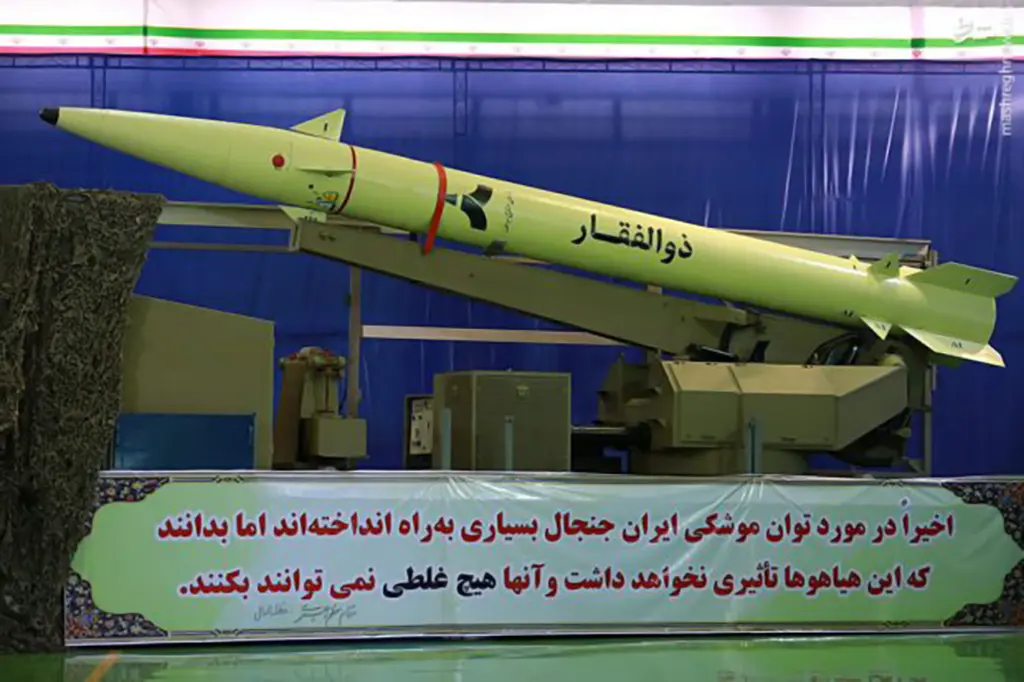
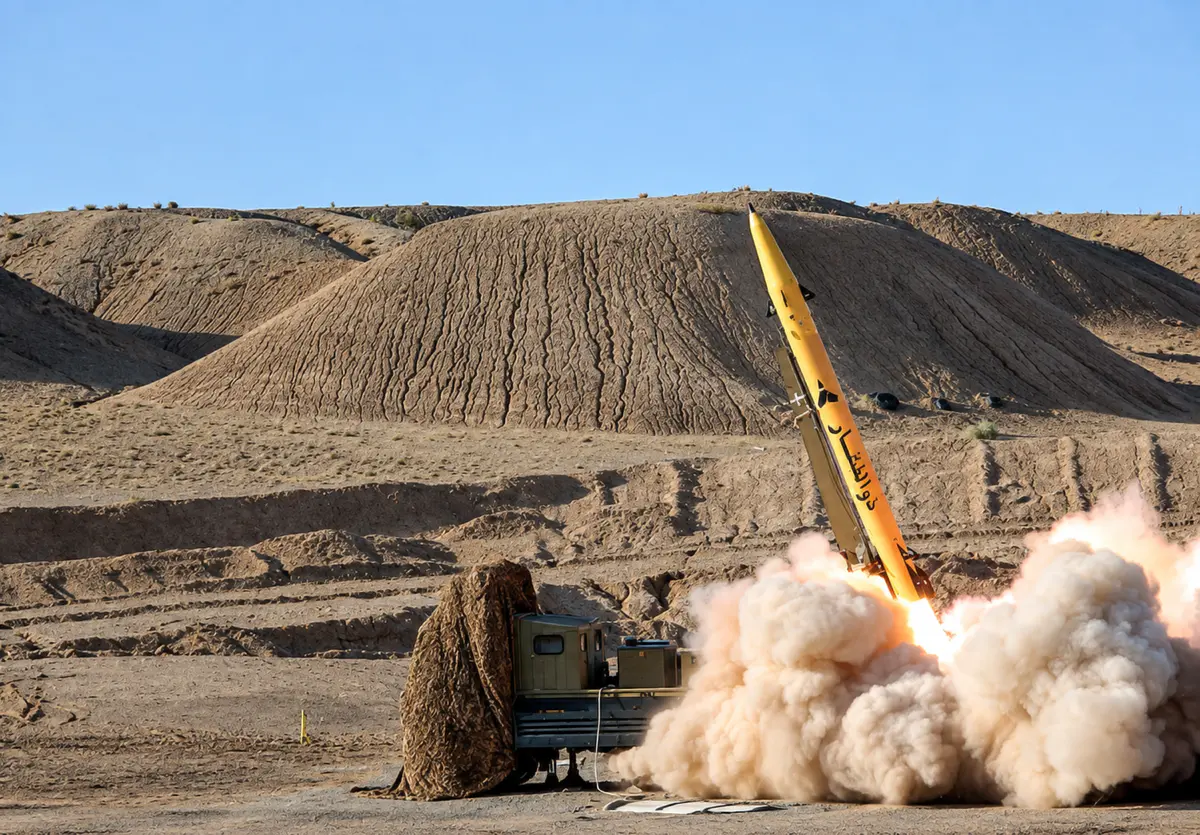
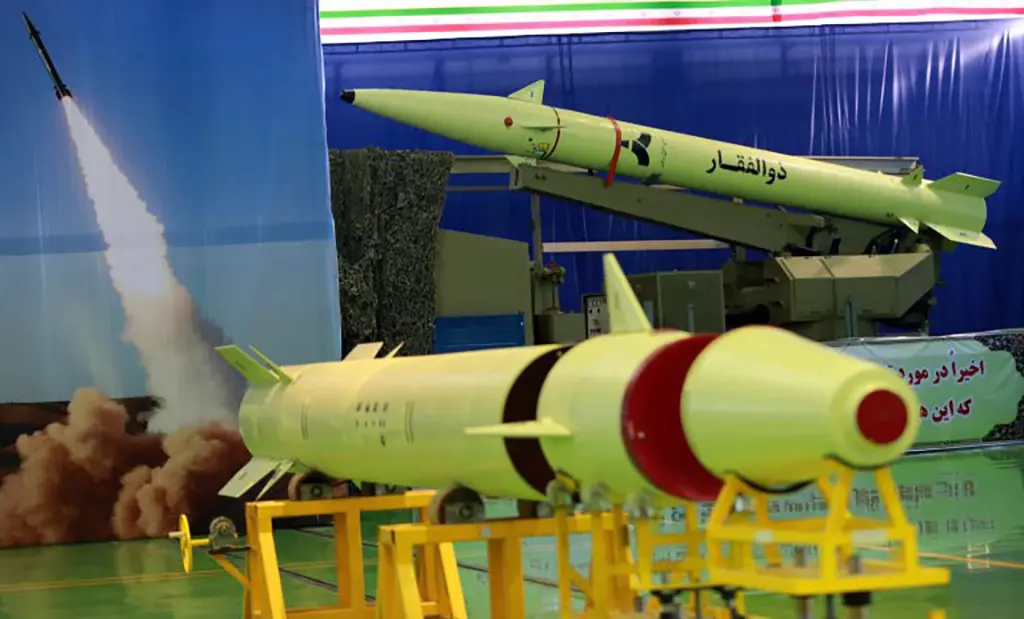
The Zolfaghar ballistic missile is one of Iran’s most advanced solid-fueled, short-range, surface-to-surface missiles from the upgraded Fateh-110 family. With an operational range of 700 kilometers, a speed of Mach 5, a detachable anti-jamming warhead, and a mobile launch chassis, this missile establishes a key balance between operational speed, pinpoint accuracy, and battlefield survivability.
Zolfaghar Missile; Technical Specifications, Range, and Accuracy of the Precision-Guided Ballistic Missile

Achievement Specifications

Defense DomainMissile
Equipment TypeMissile
Manufacturer Countryایران

Key Features

  • Single-stage composite solid-propellant motor with ultra-fast launch readiness
  • Operational range of 700 kilometers and a terminal-phase speed equivalent to Mach 5
  • Equipped with a detachable warhead weighing 500 to 579 kilograms of high explosives
  • Resistance against electronic warfare and jamming signals (anti-jamming)
  • Curved aerodynamic nosecone to reduce thermal drag effects at high speeds
  • Optimized trapezoidal fins at the aft of the guidance and control unit
  • Hybrid inertial and satellite guidance with an impact error of less than 10 meters (CEP)
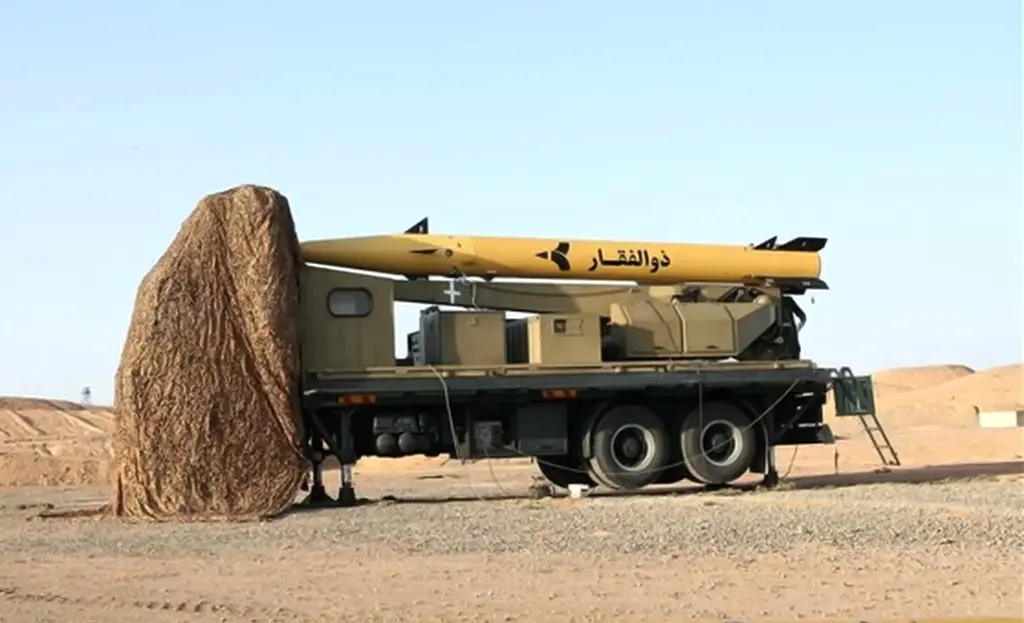
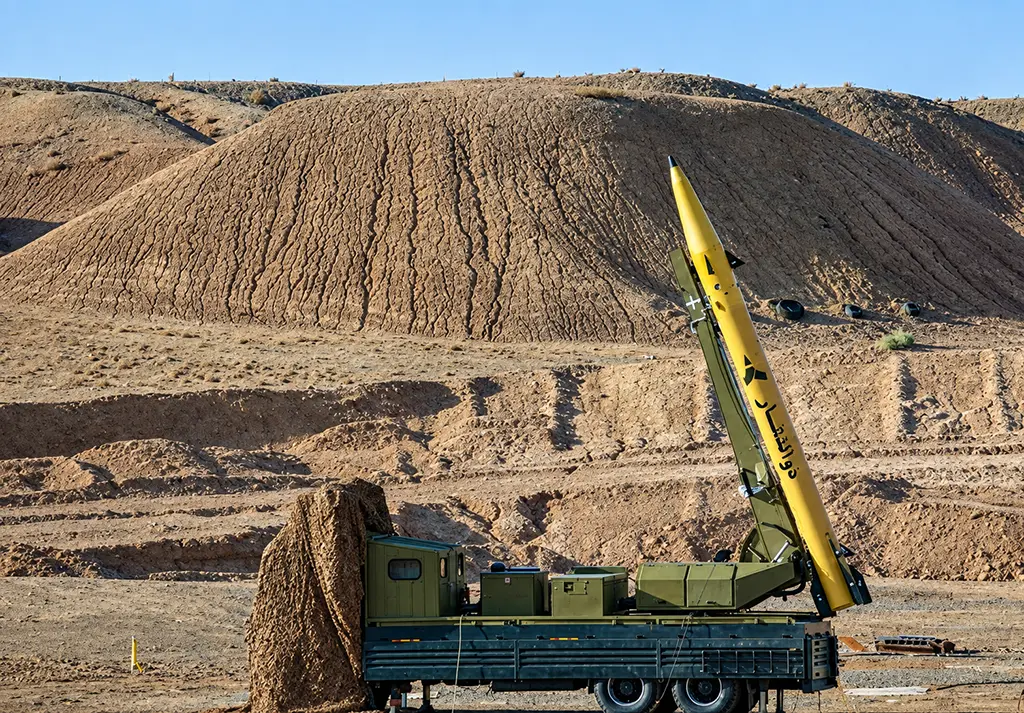
  • Inclined launch from agile single- and dual-rail mobile launchers
Text Size:
TelegramWhatsAppFacebookX

Full Description

Zolfaghar Ballistic Missile: The Symbol of Precision and Agility in Iran’s Missile Arsenal

The Zolfaghar ballistic missile is one of the most prominent achievements of the defense industry of the Islamic Republic of Iran in the field of tactical short-range, surface-to-surface missiles. This solid-fueled missile, which officially entered operational service in the Armed Forces in September/October 2016 and was first unveiled during the Payambar-e Azam (Great Prophet) military drill in Bandar Abbas, is considered an upgraded and evolved variant of the fourth-generation “Fateh-110” missile series.

The development of Zolfaghar was a strategic turning point in indigenous post-Sacred Defense deterrence doctrine—a project conceived around reducing launch preparation time, enhancing resistance to enemy air defenses, and achieving pinpoint accuracy with a circular error probable of under 10 meters to decisively and precisely neutralize regional threats.
موشک ذوالفقار؛ مشخصات فنی، برد و دقت موشک نقطه‌زن بالستیک

Technical Specifications and Aerodynamic Design of Zolfaghar

Compared to earlier variants in the Fateh family, designers at the Ministry of Defense’s Aerospace Industries Organization introduced significant structural and aerodynamic modifications to the Zolfaghar:

1. Refined Nosecone Geometry and Drag Thermal Mitigation

In the Zolfaghar missile, the traditional sharp-tipped nosecone was redesigned into an aerodynamically optimized curved profile. This engineering overhaul reduces aerodynamic drag thermal loads generated by severe atmospheric friction at hypersonic speeds, enabling the missile to sustain a terminal dive velocity of Mach 5.

2. Optimization of Guidance Fins

The configuration of the control section along the longitudinal axis of the missile was also revised; the previous triangular control fins were replaced with cropped-delta “trapezoidal” fins. These surfaces were relocated to the base of the warhead section behind the guidance, navigation, and control (GNC) unit to ensure sustained aerodynamic controllability through the terminal seconds preceding impact.

Detachable Warhead and Missile Defense Survivability

One of the most distinct operational advantages of the Zolfaghar missile over other short- to medium-range ballistic systems is its detachable warhead design. This operational mechanism provides critical tactical benefits:

  • Dead-Weight Reduction and Elimination of Airframe Drag Penalties: Jettisoning the spent motor casing in the terminal phase eliminates airframe drag and structural momentum loss, maximizing the kinetic energy and maneuver capability of the warhead.
  • Radar Cross-Section (RCS) Reduction: Separating the warhead from the fuel casing leaves hostile early-warning and missile defense radars with a dramatically smaller radar signature to track.
  • Diminished Interception Probability by Air Defense Systems: Tracking and intercepting a compact, high-speed 500 kg terminal warhead at lower altitudes poses severe challenges for advanced anti-ballistic missile defense systems.

Composite Solid Propulsion and Road-Mobile Launch Platforms

Zolfaghar utilizes a single-stage composite solid-propellant rocket motor. Choosing a solid-propellant formulation eliminates pre-launch fueling requirements entirely, extends depot shelf life to several years, and facilitates rapid launch preparation within minutes.

The optimized mass and dimensions of the missile permit installation onto agile wheeled mobile chassis configured as single-rail and dual-rail launch platforms. These road-mobile, inclined-launch platforms enable off-road navigation across rugged terrain, rapid firing sequences, and immediate “shoot-and-scoot” repositioning, maximizing unit survivability against counter-battery fire and aerial surveillance.

Technical Specifications of the Zolfaghar Ballistic Missile

Technical Parameter Operational Data
Missile Type Tactical short-range surface-to-surface ballistic missile with inclined launch
Country of Origin & Manufacturer Islamic Republic of Iran
Entry into Service 2016 (Officially unveiled during the Payambar-e Azam exercise)
Overall Length 10.3 meters
Fuselage Diameter 0.68 meters
Gross Launch Weight 4,620 kg
Propulsion System Single-stage composite solid-propellant motor
Effective Operational Range 700 kilometers
Terminal Phase Speed Mach 5
Warhead Weight 450 to 500 kg (High-explosive payload up to 579 kg)
Warhead Type Detachable with terminal guidance through point of impact
Navigation & Guidance System Hybrid inertial navigation system (INS) and jam-resistant satellite navigation
Accuracy Metric (CEP) 10 meters
Launcher Type Road-mobile transporter launcher (single-rail and dual-rail configurations)

Advanced Guidance Architecture and Electronic Warfare Resistance

The precision-strike capability of the Zolfaghar missile is delivered through an integrated guidance architecture:
  • High-Precision Inertial Guidance (INS) to Impact: The onboard autonomous inertial navigation system steers the missile along its target corridor without requiring external RF transmissions.
  • Anti-Jamming Satellite Correction System: The satellite positioning augmentation system is shielded against electronic warfare countermeasures, preventing radio-frequency spoofing or jamming signals from disrupting the missile’s trajectory.
  • Lethal Accuracy (CEP): The missile features a circular error probable of 10 meters, ranking it among the most precise tactical strike assets for the neutralization of command centers, airbases, and high-value strategic installations.

News

News Archive
  1. 01

    General Talaei-Nik: Iran Will Never Permit National Rights and Interests to Be Disregarded

  2. 02

    Iran’s Comprehensive Readiness to Counter Enemy Scenarios and Break Blockades

  3. 03

    Iran’s Naval Authority in the Strait of Hormuz: Guaranteeing Global Trade Security and Stability

  4. 04

    Major General Abdollahi’s Warning to Enemies: Iran’s Devastating Response Awaits Aggressors

  5. 05

    Capture of the Second U.S. Navy UUV in the Strait of Hormuz; REMUS 600 Caught in IRGC’s Electronic Warfare Net

مطلبی برای نمایش وجود ندارد.

Defense Achievements

View All
  1. 01

    Zolfaghar Missile; Technical Specifications, Range, and Accuracy of the Precision-Guided Ballistic Missile

  2. 02

    Emad Ballistic Missile: Range, Technical Specifications, and Guidance Technology

  3. 03

    Shahed 191 (Saegheh-2) Drone; A Review of Technical Specifications and Weaponry Capabilities

  4. 04

    Shahed 181 (Saegheh) Drone; A Review of Technical Specifications and Weaponry Capabilities

  5. 05

    Shahed 149 (Gaza) Drone; Technical Specifications and Weaponry Capabilities

مطلبی برای نمایش وجود ندارد.

Official Statements

View All
  1. 01

    IRGC Aerospace Force Missile Attack on US Navy Aircraft Carrier and Destroyer

  2. 02

    IRGC Navy Attacks U.S. Military Remote-Controlled Surface Vessel (USV) in the Strait of Hormuz

  3. 03

    IRGC’s Operational Response to the U.S. Terrorist Attack on Iranian Oil Tankers

  4. 04

    Ministry of Foreign Affairs Statement Condemning Attacks on Iran / The U.S. Regime Has Violated All Components of the Agreement

  1. 01

    Ministry of Foreign Affairs Statement Condemning Attacks on Iran / The U.S. Regime Has Violated All Components of the Agreement