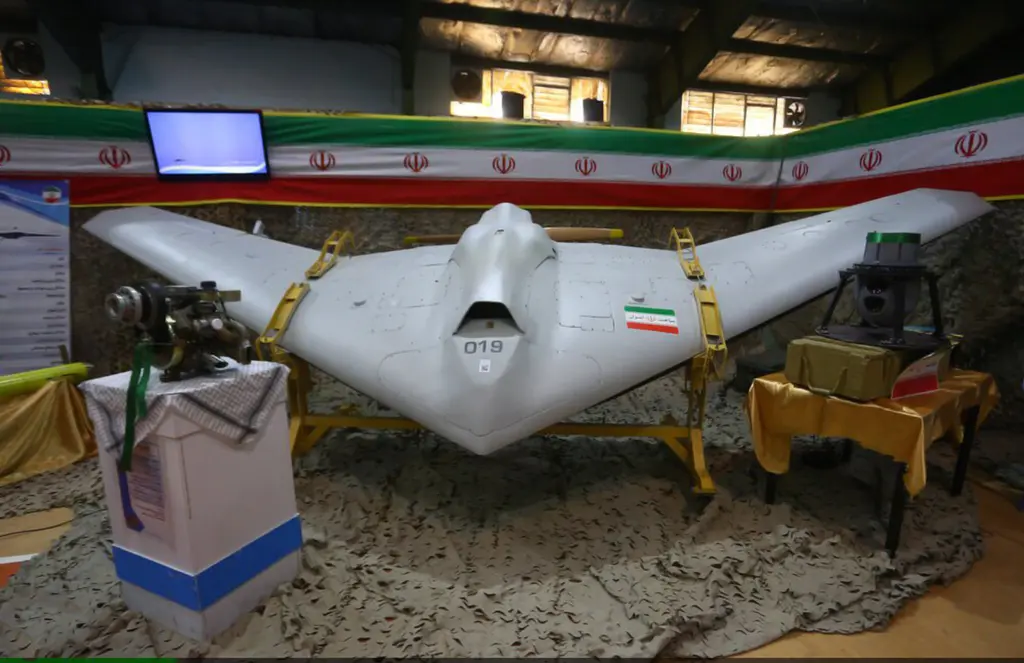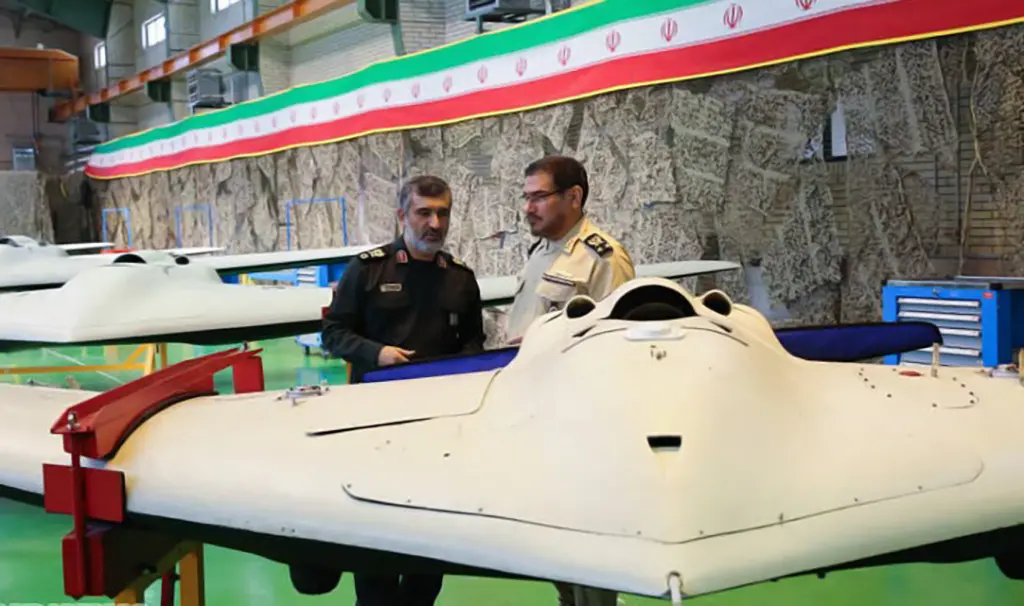
The Shahed 181 drone, nicknamed “Saegheh” (Lightning), is a long-range Iranian combat and reconnaissance aircraft with a flying-wing and stealth design. This drone was developed based on the reverse engineering of the American RQ-170 drone at a 60% scale compared to the Shahed 171 (Simorgh) drone. By utilizing a piston engine, removing the landing gear, and reducing construction costs, it has enabled mass production and the execution of precision strike missions.
The Shahed 181 drone, also known as “Saegheh” (Lightning) among the country’s aviation equipment, is one of the advanced and economic examples in the family of Iranian flying-wing drones. This combat and reconnaissance aircraft was officially unveiled during the visit of the then-secretary of the Supreme National Security Council to the IRGC Aerospace Force’s drone achievements exhibition in 2016; an exhibition where two variants equipped with jet and propeller engines from this family were introduced. Shahed 181 is considered a redesigned 60% scale version of the strategic Shahed 171 (Simorgh) drone, the development of which was primarily based on technologies extracted from the reverse engineering of the American RQ-170 aircraft by Shahed Aviation Industries.
Engineering Design and Production Cost Optimization
In the design of the stealth Shahed 171 drone, expensive turbofan engines are used, which entail high production and maintenance costs. To facilitate mass production and reduce technical dependencies, the defense industry carried out a precise optimization in the design of the Shahed 181 drone: replacing the turbofan engine with a two-stroke piston propeller engine. This technical transformation, along with the elimination of conventional landing gear, allowed the armed forces to acquire a product with a much lower finished cost suitable for serial production, without losing the stealth geometric features and flight characteristics of the flying-wing design.
Armament and Offensive Guidance System
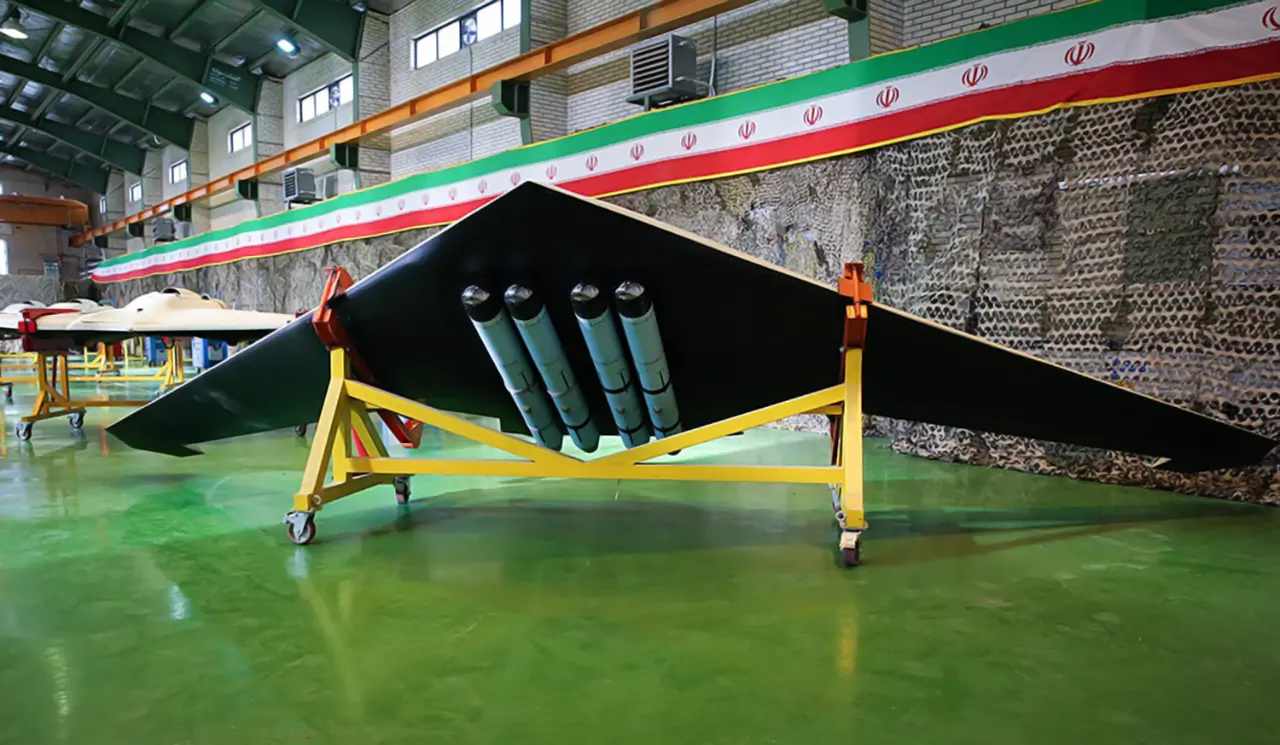
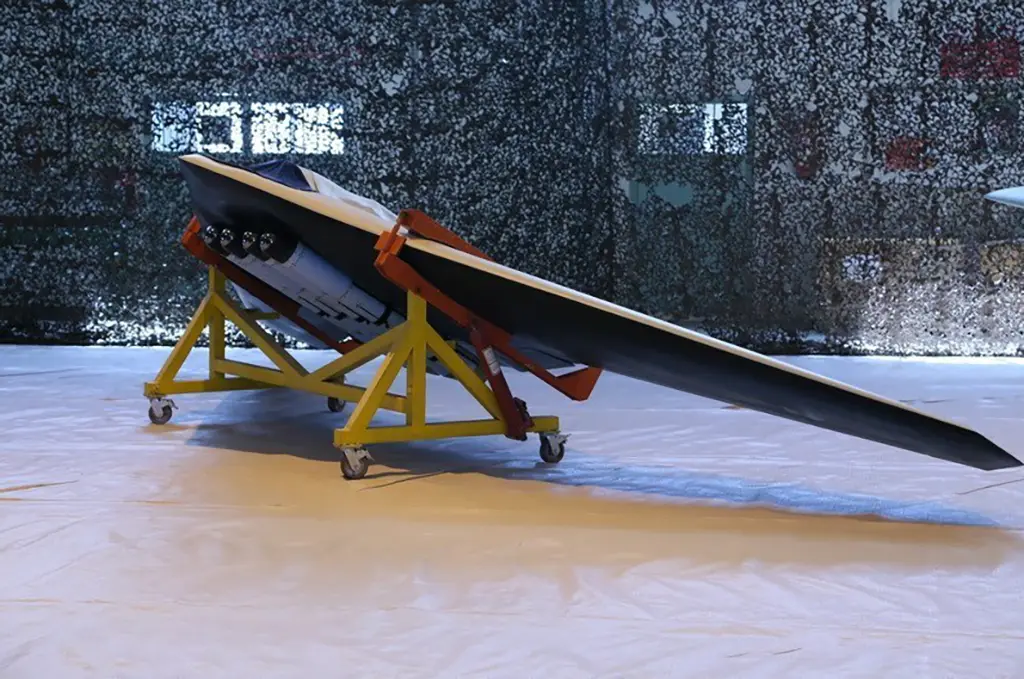
In addition to reconnaissance capabilities, Shahed 181 has direct combat utility. This aircraft can carry up to four Sadid-342 (or Sadid-1) smart and precision-guided bombs. These weapons are placed in an external station on the underside of the fuselage between two guiding skids. The selection of the Sadid-342 series bombs is due to their special design with folding wings; an advantage that occupies minimal space and creates the possibility of a compact arrangement of four bombs adjacent to each other.
Operational Launch and Landing Method
To avoid the extra weight caused by mechanical landing gear systems, the Shahed 181 drone utilizes a specialized takeoff and landing mechanism:
Technical Specifications of the Shahed 181 (Saegheh) Drone
| Specifications | Technical Details |
|---|---|
| Mission Type | Reconnaissance and Combat |
| Fuselage Length | 2.7 meters |
| Wingspan | 7.3 meters |
| Combat Range | 1,150 km |
| Maximum Range | 3,450 km |
| Flight Endurance | 13 hours |
| Flight Ceiling | 4,572 meters (15,000 feet) |
| Propulsion | Piston engine with 80 horsepower |
| Maximum Speed | 220 km/h |
| Cruise Speed | 150 km/h |
| Maximum Takeoff Weight | 480 kg |
| Payload and Fuel Capacity | 165 kg |
| Carryable Armament | 4 Sadid-342 bombs |
As an important member of the Iranian drone family, the Shahed 181 drone demonstrates the intelligence of Iranian military designers in adapting advanced equipment to operational needs and reducing military costs, which has brought about significant changes on battlefields.