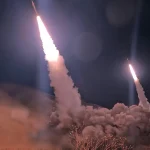
Iran’s Missile Range: Reconsidering the 2,000-Kilometer Cap
The prospect of extending Iran’s missile range has attracted renewed attention following remarks about a military response “without geographical limits,” raising questions about the future of the Islamic Republic of Iran’s missile policy and the scope of its deterrence.
The source text states that Ayatollah Seyyed Mojtaba Khamenei emphasized during an October 31 meeting with senior armed forces commanders: “Any level and type of threat must be met with an immediate and effective response, without geographical limits.”
The same text also reports that the IRGC spokesperson announced the lifting of missile range restrictions. However, reporting these remarks as confirmed news requires a reference to the official transcript, the date of the meeting, and the original source.
Does a Response Without Geographical Limits Mean Greater Missile Range?
A response without geographical limits cannot, on its own, be equated with an announcement that longer-range missiles have been built or deployed. Such wording could indicate a change in the scope of military responses, but identifying its specific implications for weapons capabilities requires further information and official statements.
Even an announcement lifting a policy restriction is different from confirmation that a new system has been built, successfully tested, or entered operational service. Analysis of the missile program’s future must therefore distinguish between strategic decisions, technical capacity, and demonstrated operational capability.
The History of Iran’s Declared Missile Range Cap
According to the original text, Iran acquired the ability to build and test ballistic missiles with a range of approximately 2,000 kilometers in the late 2000s and early 2010s. It also states that, in 2017, the then-IRGC commander described the 2,000-kilometer cap as a restriction based on the country’s declared policies.
In this account, the restriction is presented as a strategic consideration rather than necessarily the ultimate limit of Iran’s technology. However, statements about the potential to extend missile range should not replace evidence of a specific missile’s actual performance.
Khorramshahr’s Role in the Long-Range Missile Debate
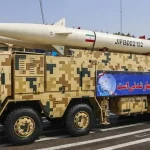
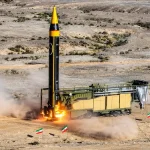
The Khorramshahr ballistic missile family is a central focus of discussions about the future range of Iran’s missiles. The original text dates the family’s unveiling to 2017 and references its declared range of approximately 2,000 kilometers and its heavy-payload capacity.
However, a missile’s declared specifications alone are insufficient to draw conclusions about the range of potential future variants. Assessing such claims requires credible test data and verified specifications.
For this reason, estimates in the original text about extending the Khorramshahr’s range should be treated as technical speculation, not as confirmed specifications of an operational system.
Does Space Capability Mean Iran Has Acquired an ICBM?
Under the commonly used classification, ballistic missiles with ranges exceeding approximately 5,500 kilometers are categorized as intercontinental ballistic missiles. However, a system’s inclusion in this category does not mean it can reach every point on Earth.
The source text refers to the Qased, Zoljanah, and Qaem satellite launch vehicle programs in its discussion of the country’s technological capacity. Overlap between space and missile technologies does not, in itself, prove possession of an operationally ready ICBM.
The Gap Between Technological Capacity and an Operational System
A successful space launch cannot be equated with verification of a weapon system’s performance. Reliability, accuracy, payload performance under mission conditions, and operational readiness are separate issues, each requiring assessment and credible evidence.
An accurate answer to the question “Can Iran build an ICBM?” therefore cannot be derived solely from the names of its satellite launch vehicles or their general specifications. The supplied text also provides insufficient evidence to confirm the existence of an operational ICBM.
A Potential Shift in Deterrence Beyond Increased Range
Alongside a response without geographical limits, the original text also mentions updating the target database. If these remarks are officially confirmed, the issue could extend beyond increasing weapons range to encompass the scope of military responses and deterrence calculations.
From this perspective, the key question is not simply how much Iran’s missile range might increase, but how—and with what evidence—declared policy translates into changes in operational capability.
Conclusion: If confirmed, the potential removal of the 2,000-kilometer cap could mark a shift in Iran’s missile policy. It would not, however, independently demonstrate the acquisition of an ICBM. Distinguishing official statements from technical estimates and media speculation is essential to accurate reporting on this issue.