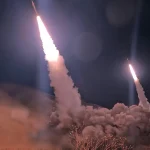
Fajr Rocket Artillery Family: Specifications, Range, and Evolution from Fajr-3 to Guided Fajr-5

Rocket artillery serves as the backbone for delivering massed fire and pulverizing enemy staging areas in military doctrine. Covering a wide spectrum of ranges and calibers, the Fajr family of artillery rockets has succeeded in providing heavy, lethal fire support for combat units. This article examines the operational history, technical specifications of various Fajr variants, their evolution into guided systems, and their strategic role.

Fajr Rocket Artillery Family: Specifications, Range, and Evolution from Fajr-3 to Guided Fajr-5

Achievement Specifications

Defense DomainGround
Equipment TypeRocket

Key Features

  • Caliber and Range Diversity: Covering operational ranges from 43 kilometers (Fahr-3) to over 130 kilometers in advanced Fajr-5 variants.
  • Solid-Propellant Propulsion: High combat readiness, rapid mobility on mobile launchers, and ease of firing.
  • Transition to Precision-Strike Technology (Fahr-5C): Equipping 333mm caliber rockets with guidance canards and inertial and satellite navigation sensors.
  • High Volume of Fire: Multi-round launcher capability (4-round, 8-round, and 12-round launchers) for executing heavy strikes in the shortest possible time.
  • High-Explosive Fragmentation Warhead (HE-FRAG): Maximizing damage within the impact radius.
Text Size:
TelegramWhatsAppFacebookX

Full Description

The Fajr family of artillery rockets ranks among the most significant and powerful systems developed by Iran’s defense industry to deliver massed fire and provide long-range fire support. This family comprises various models, including the Fajr-3 (240mm caliber, 43 km range), Fajr-4, and Fajr-5 (333mm caliber). The new generation of these rockets, designated as the Fajr-5C, has been equipped with precision guidance systems (GPS/GLONASS), transforming them from unguided rockets into precision-guided munitions.

Alongside strategic ballistic missiles and cruise weapons, possessing a high-volume, rapid, and relatively low-cost fire support system is essential for crushing frontline positions and concentrated enemy forces. Due to their capability to generate massive firestorms over wide areas, rocket artillery has consistently drawn the attention of major armies. Recognizing this need decades ago, the defense industry of the Islamic Republic of Iran initiated the development of indigenous Fajr rockets—evolving from traditional unguided models into advanced precision-guided weapons.

Evolution and Members of the Fajr Rocket Family

1. Fajr-3 Rocket: The 240mm Medium-Range Support Rocket

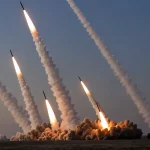
The first and one of the most practical members of this family is the 240mm Fajr-3 rocket. Mounted on 12-tube solid-propellant launchers, this rocket meets artillery units’ requirements for a formidable medium-range fire support tool.

  • Operational Range: The Fajr-3 is capable of engaging targets at an approximate distance of 43 kilometers.
  • Warhead Specifications: The total weight of the rocket is approximately 407 kilograms, featuring a heavy high-explosive fragmentation warhead weighing about 85 kilograms, which produces a significant destruction radius.

2. Fajr-5 Rocket: The 333mm Giant of Iranian Artillery

Without a doubt, the best-known and most powerful member of this family is the 333mm Fajr-5 rocket, recognized as one of the longest-range and heaviest artillery rockets in its class.

  • Base Version Operational Range: In initial models, the Fajr-5 had a range of approximately 75 kilometers, which was subsequently increased to up to 130 kilometers in optimized variants.
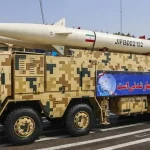
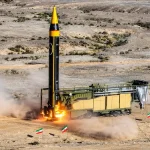
  • Physical Specifications: This rocket measures roughly 6.4 meters in length, with a total weight exceeding 900 kilograms, of which about 175 kilograms consists of high explosives in the warhead. Launchers for this rocket are typically configured as 4-round systems mounted on heavy tactical vehicles.

3. A Revolution in Precision: The Guided Fajr-5C

The greatest challenge of traditional artillery rockets has been circular error probable (CEP) at extended ranges. To address this issue, Iranian defense industry specialists introduced the upgraded Fajr-5C variant.

  • Guidance and Navigation System: As noted in specialized reports by Fars News Agency, the Fajr-5C rocket is equipped with guidance canards (control fins) in the warhead section, inertial navigation systems (INS) combined with satellite navigation aids (GPS/GLONASS), and MEMS sensors.
  • Transition to Precision Weaponry: With the addition of these systems, the Fajr transformed from a pure “area-suppression” weapon into a fully “precision-guided” rocket capable of destroying critical enemy targets with negligible error.

Operational and Tactical Features of Fajr Rockets

  • Rapid Deployment and High Mobility (Shoot and Scoot): Fajr rocket launchers are mounted on heavy military vehicle chassis, enabling them to vacate their firing positions immediately after executing a strike to avoid detection and destruction by counter-battery fire.
  • Cost-Effectiveness and High Efficiency: Compared to expensive guided ballistic missiles, artillery rockets cost significantly less, making their mass deployment highly economical for destroying troop concentrations and logistical depots.

Conclusion

The Fajr artillery rocket family—ranging from traditional models like the Fajr-3 and Fajr-5 to the advanced, guided Fajr-5C variant—testifies to the dynamic advancement of Iran’s arms industry. The conversion of conventional rockets into precision-guided armaments demonstrates the astute adaptation of the nation’s defense doctrine to the requirements of modern, precision-centric warfare.

Sources

  • https://farsnews.ir/M_r7726/1749550110649830608
  • https://farsnews.ir/Wire_Plus/1620889836002468334